
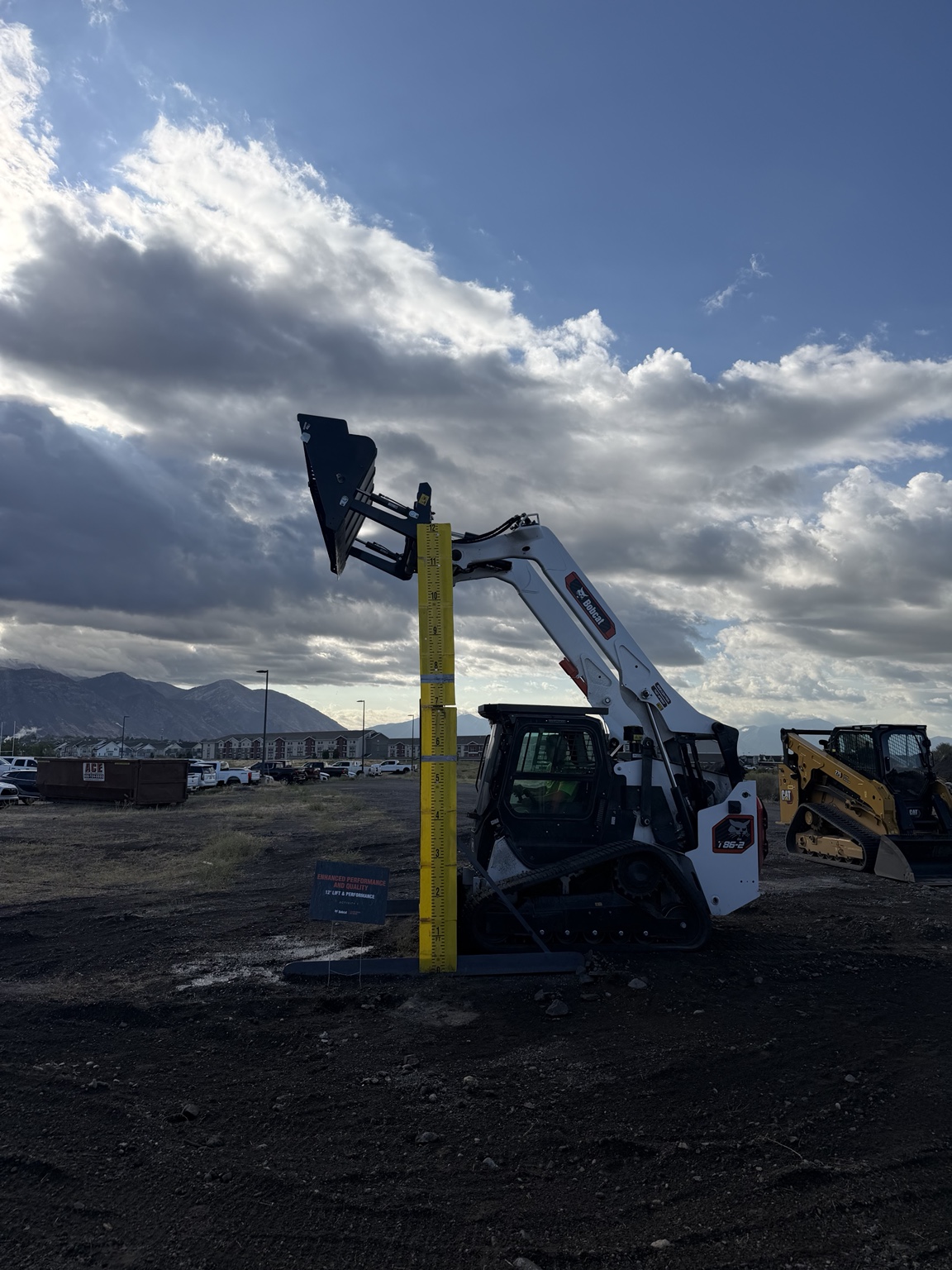
The T86-2 was one of the machines covered during Bobcat Loader Evolution training. Its engine output, lift geometry and hydraulic options make it worth a close look for customers whose work calls for a large compact track loader.
For someone loading trucks, handling material or running a demanding attachment, the useful question is how those capabilities fit the job. A specification becomes valuable when it solves a problem you regularly face.
01
Start with the correct specifications
Bobcat currently lists the following figures for the T86-2. Capacity depends on the undercarriage and configuration.
| Specification | Published figure |
|---|---|
| Engine power | 115 hp |
| Rated operating capacity with solid undercarriage | 3,925 lb |
| Rated operating capacity with torsion undercarriage | 3,700 lb |
| Height to hinge pin | 144 inches or 12 feet |
| Standard auxiliary flow | 23 gpm |
| Optional high flow | 36.6 gpm |
| Optional Super Flow | 42 gpm at 4,061 psi |
Source: Bobcat T86-2 specifications. Match published figures to the configuration being quoted.
02
What the lift height means
The 12-foot measurement is height to the bucket hinge pin. Dump clearance is a separate measurement affected by the bucket and its position. A buyer loading a tall truck should check clearance and reach with the attachment they intend to use.
At training, Bobcat presented the revised lift geometry as gaining approximately 12 inches of dump height over the previous model. That improvement and the 12-foot hinge-pin specification describe different measurements.
Bring us the height of the truck body, mixer or other loading target. We can work through the loader and attachment combination against those dimensions. Rated operating capacity also needs to be checked for the actual setup; it should never be treated as permission to lift any load to any position.
03
Match hydraulic flow to the attachment
Super Flow is an optional configuration for demanding hydraulic work. Bobcat lists 42 gpm at 4,061 psi and identifies applications such as drum mulching and pavement milling. The manufacturer’s hydraulic guide explains the available flow levels.
Start with the attachment’s requirements. Confirm its flow and pressure range, connections, controls and any case-drain requirements before choosing a loader configuration. Additional hydraulic capacity only helps when the attachment can use it correctly.
The training also covered cooling and hydraulic routing. If an attachment is going to run for long stretches, discuss the expected workload and operating conditions as part of the equipment selection.
04
Bring us the job details
For a useful T86-2 comparison, send us the attachment model, typical material or load, loading height and current machine.
Contact your local Shepherd’s Garage team to discuss configuration, availability and a demonstration. We will help you determine whether the T86-2’s capabilities fit the work or whether another loader makes more sense.
Shepherd’s Garage · Montana
Let’s put the right loader to work.
Tell us about your operation, attachments and current machine. We’ll help you compare the configurations that fit.
More from Bobcat Loader Evolution