
Start with the right comparison
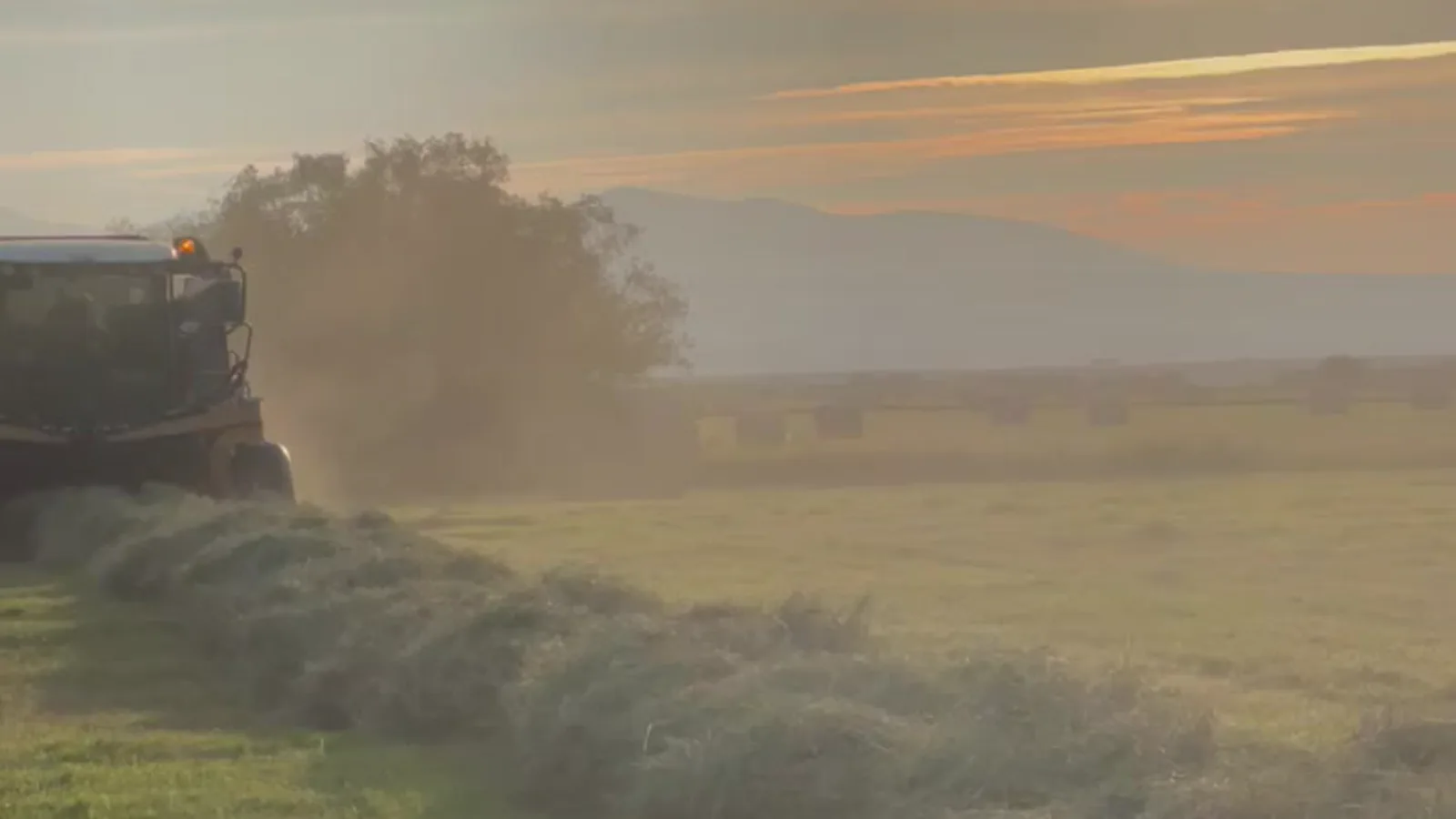
Farmers and ranchers already understand why a self-propelled windrower has advantages over a tractor pulling a mower-conditioner. The power unit and header work together, the operator sees the crop and the entire machine is optimized for one job. The same logic applies to the ZR5. The correct comparison is not a ZR5 against the purchase price of a pull-type baler; it is one integrated baling system against a tractor-and-baler combination.
Hydraulic drive changes more than the power source
A conventional round baler is mechanically driven through a tractor PTO, driveline and gearbox. The ZR5 uses hydraulic drive for the baler and hydrostatic drive for the machine. Using the hydraulic controls in the cab, the operator can adjust pickup speed and bale-chamber speed independently—they are not locked together at one fixed ratio. That lets the operator match pickup speed to windrow size and feeding conditions while tuning chamber speed separately for crop flow and load. The hydraulic system can also sense rising load and respond with flow. No baler is impossible to plug, but the ZR5 pickup can be reversed from the cab so many plugs can be cleared without the operator climbing out to dig hay from the machine.
The machine completes the bale cycle
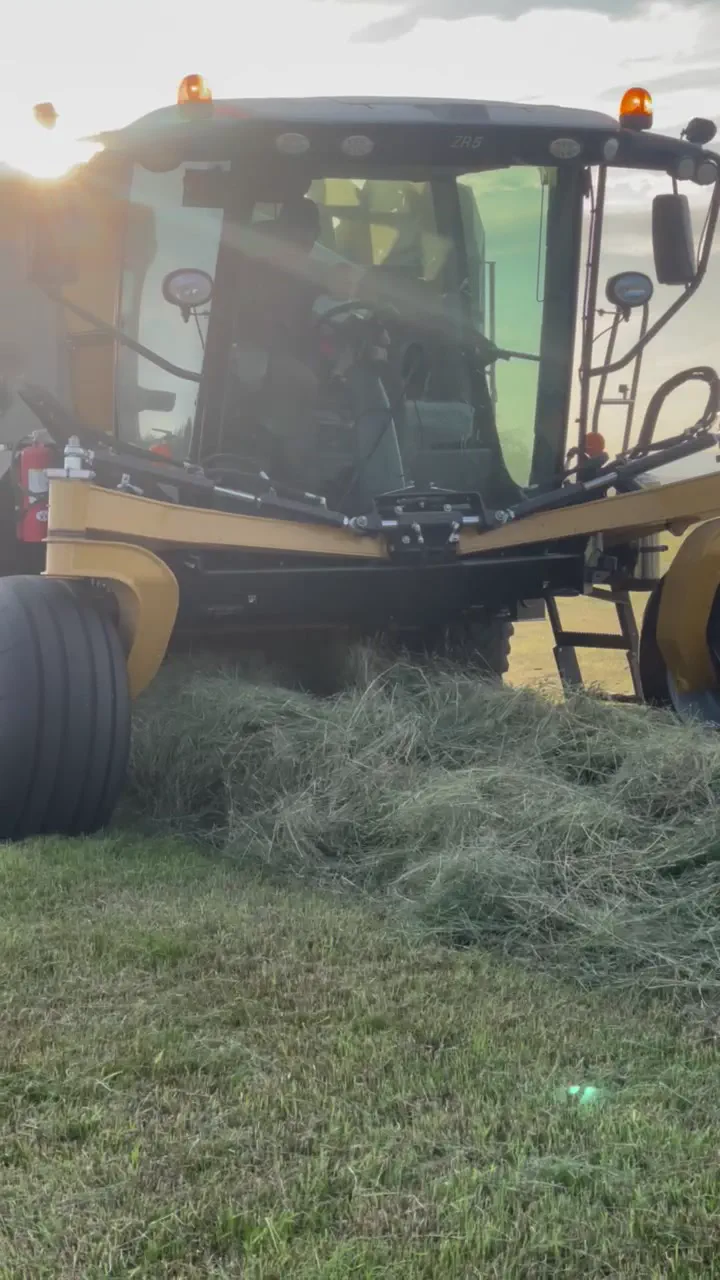
On a pull-type baler, the operator repeatedly watches bale size, stops at the right point, starts the tie cycle, opens the chamber, ejects the bale, closes the chamber and starts again. In automation mode, the ZR5 stops, wraps, turns, ejects and closes the chamber. The operator does not have to initiate every step or judge the stopping point bale after bale. That reduces fatigue, overfilling and inconsistent stops while keeping attention on the windrow and crop conditions.
Maneuverability without a tractor and hitch
A tractor, hitch and pull-type baler need room to turn. The ZR5 can counter-steer at the end of a windrow and line up tightly with the next one. Integrated quarter-turn technology can turn during the tie cycle and place bales parallel to the windrow, making the later pickup job more orderly. With no hitch between two separate machines, there are also fewer tires tracking across the field than with a tractor-baler combination.
Watch hay enter the baler without looking backward all day
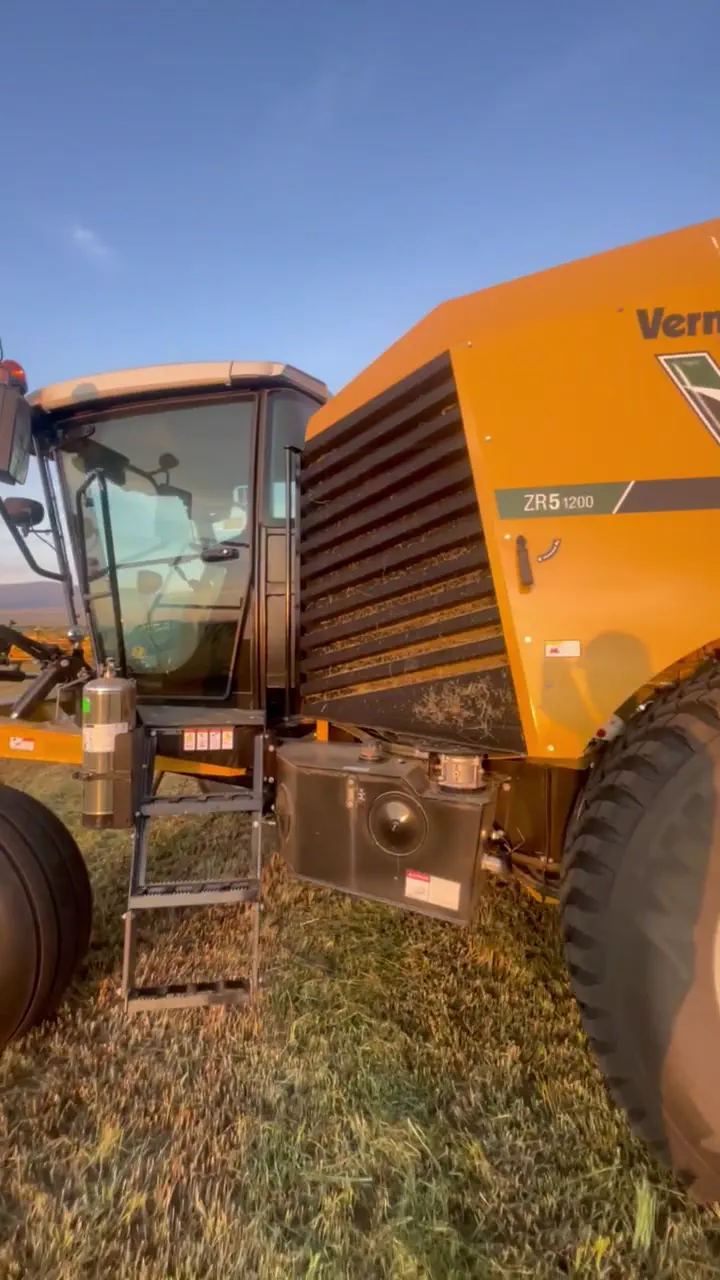
A pickup camera and rear camera are displayed in the cab. The operator can sit naturally, center the windrow, identify feeding trouble sooner and see the bale leave the chamber without constantly twisting around. That visibility is one of the same practical advantages operators already value in a self-propelled windrower.
The ride matters when the day is long
The cab is positioned over an independent hydraulic suspension so rough hay ground does not transfer every bump directly to the operator. The machine is also quiet and straightforward to operate. After ten or twelve hours, less noise, less twisting, fewer repeated commands and a smoother ride affect how alert and accurate an operator remains.
“An empty pop can can ride on the floor—it is that smooth.”
— ZR5 customer
Monitoring and lubrication continue while baling
TempSense monitors bearing temperatures while the machine is operating and alerts the operator when a bearing needs attention. The automatic lubrication system greases designated points during operation. Neither replaces inspection and maintenance, but both make maintenance more consistent and can help identify trouble earlier during the busiest part of the season.
Road mode and field mode match the work
The ZR5 is not limited to field-speed operation. Field mode configures the machine for baling, while road mode provides high-speed travel between fields. That matters when acreage is scattered or a weather window is closing: the operator can finish a field, switch modes and move the complete baling machine without transporting a separate tractor-and-baler combination.
The chamber can be unloaded and exchanged
The baler chamber is designed as a removable module that can be unloaded from the power unit and exchanged with relative ease. That makes major chamber service more practical and, if another chamber is available, gives an operation the option of installing it while the first chamber is being repaired or rebuilt. The power unit and chamber do not have to be treated as one permanently inseparable machine.
Withstanding the test of time
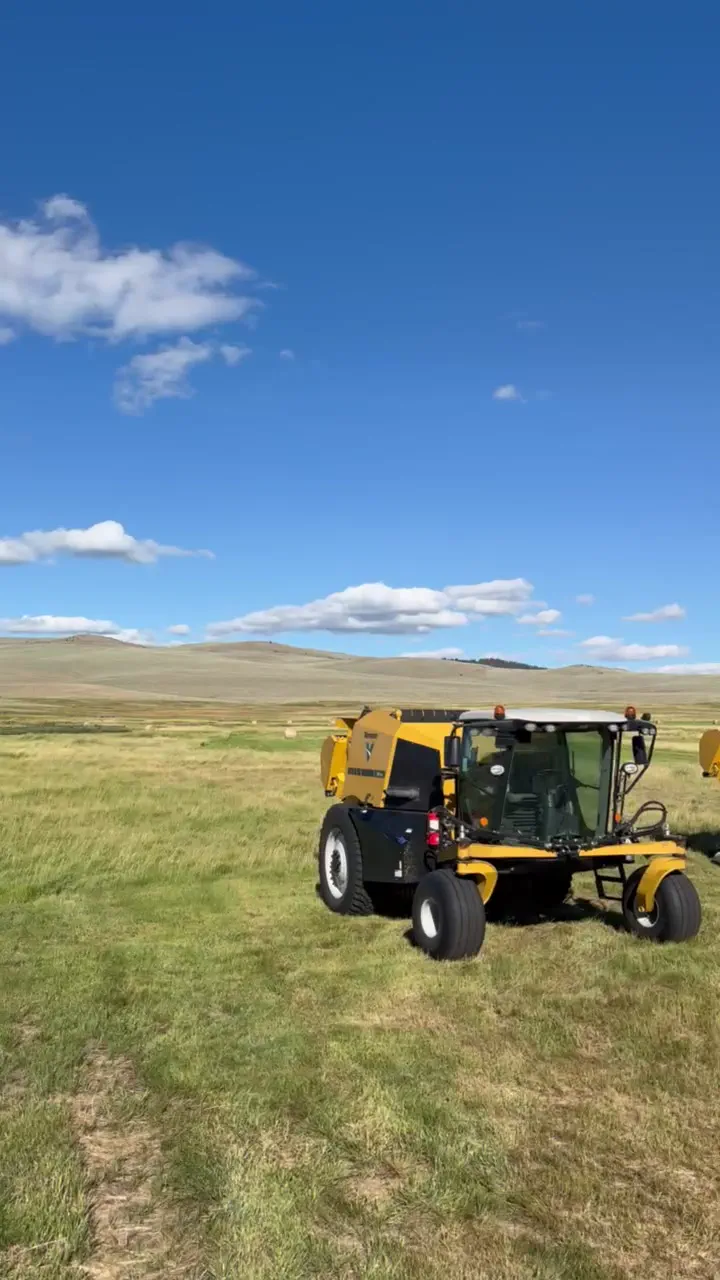
Our view is based on multiple seasons of personally baling with the ZR5 and supporting the machines in real operations. One customer operation has made more than 70,000 bales with ZR5 machines. In heavy crop, that operation consistently produces about 1.7 times as many bales with the ZR5 as with its own tractor-and-pull-type combination, and it is now getting into its third ZR5. Repeat ownership at that bale count says more than a farm-show demonstration ever could.
“One beautifully engineered machine.”
— ZR5 customer
Make the complete economic comparison
The ZR5 will not be right for every operation, but comparing it with the price of a pull-type baler alone is misleading. Evaluate the complete system and the value of finishing hay inside a limited weather window.
- The tractor required to pull the baler
- Tractor hours, wear, depreciation and the loss of that tractor for other work
- Time spent turning, plugging, wrapping and ejecting
- Independent in-cab pickup and bale-chamber speed control for changing crop conditions
- Operator fatigue, skill and bale-to-bale consistency
- High-speed road travel between fields and the value of weather-window productivity
- A removable, exchangeable chamber for greater service flexibility
- Maintenance visibility and bearing-temperature monitoring
Do not judge it as a baler sitting beside a tractor
Look at the ZR5 as an integrated haying machine and the logic becomes much clearer. It gives baling many of the same advantages a self-propelled windrower brought to mowing: purpose-built control, visibility, maneuverability, operator comfort and the ability to optimize the entire machine for one job. It is not simply a baler that moves itself; it is a better way to manage the entire baling process.